Tuesday, October 12, 2010

El fuerte - The Fort


(Good compilation of videos and basic information of the neighborhood here)


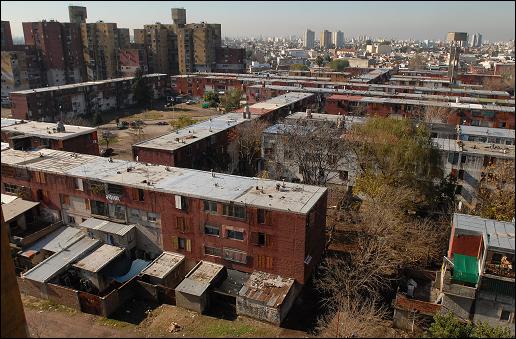
I stopped to watch the soccer court. A group of teenagers was playing a serious match; at least they looked concentrated and organized, with full teams on both sides. The younger kids and some girls watched as they stood beside the court. The sky was of a dark-grey, it announced a storm and made the synthetic green grass of the court glow with increased intensity. I wondered if the match would still go on during the time of the final game of 2010 FIFA Soccer World Cup. "The court was a recent donation of Carlitos Tevez" Z explained to me. "that is where the old dust court where he started playing used to be, he lived over that building just over the court" "That is nice of him, has he ever came back ?" "Yes he does. All the time, we were expecting to get to the final and won the cup. In that case Tevez said he would pay for beer and burgers to everyone in the barrio who went to the burger cart on the corner. That is where he used to go for beers after his games. The owner ended up being a good friend of his. Now people went to see the Argentinean games over there." Tevez is the one celebrity of the Fuerte both a pride for the neighborhood and a figure that has made the neighborhood popular as he frequently talks about his origins in the interviews. From his humble origins playing in the dust court where the pressure of betting was part of the game and where he had to confront players carrying arms in the waist, he then started playing at one of the big clubs and turned into one of the best players in Argentina. He was sold to the Manchester United were he became internationally renounced. The people that have lived in the Fuerte where happy to talk to me about him and would tell me anecdotes with him when we were talking about the life in Fuerte. I also used it as a topic of conversation to decenter the negative connotations of the Fuerte and explore if they had positive aspects and experiences about it too. Unfortunately for the burger eaters, the Argentinean team under the command of Diego Maradona did not make it further than to the "octavos" and that day the final was between the Netherlands and Spain.


"That building over there the number four is where we used to live. We could watch the games from the balcony. That balcony is where my deceased wife spent most of the day, washing clothes and hanging them, and then sitting to take a few mates and keep an eye over our kids playing bellow. It was the part of our house where she felt most comfortable, as in the Chaco we spend most of our day outside and it was really hard for her to live in such a small and enclosed place." "Can I take a picture of you Z and the court and the building where you used to live behind?" "Sure" he said taking a step behind and posing for two seconds. But as I took my old automatic film camera, (a camera I had especially taken that camera thinking an old camera would not draw the attention over me as a journalist), he changed his mind. "Ok wait, better not, someone might get upset, put it away" he said suddenly being protective and assuming his role of warranting a calm visit to the neighborhood.

We walked pass the court in the direction of the buildings he had just pointed. We got to the corridors of the "nudo" (buildings complex) where his daughter lives. Orientation was complicated for me as buildings are all of a similar style and with multiple accesses just as any complex of buildings of the same style and with not a traditional distribution around roads but organized in blocks. Apart from the presence of the gendarmeria, so far el Fuerte was a place where I was not feeling much different than in any other working class neighborhood I had visited. We walked up a staircase to the second floor, the concrete walls and floor quickly connected me with that architecture I knew pretty well as a 1970 style and which the connect with the dictatorship. As we went up I could see other common element in the suburbs: metal screens protecting the doors and windows. For me it was a paradox that the middle class uses those screens to protect from the "poor", and when one is in a working class or marginal neighborhood you see that same element that distances families form the "threats" now displaced to the street.


A smiling late twenties woman opened the door; with her free hand she holed a 6 month old baby. Her hair was wet and smelled as conditioner. I did not take out my coat as I insisted in returning to the market to buy empanadas for all of us so that we did not generate work to our host, but she insisted she wanted to cook for us and show us what a great cook she is. She added that her father loves her food so she wanted to treat him in his visits to her. She made us sit down and I regretted I had not taken more food with me and handed in a big chocolate and a pudding for desert I had taken. Her two kids came out of the room where they both sleep and where they were playing, the older girl is in fourth grade and is the best of her class her mother explained, the boy is still in kindergarten. Her husband came out of the other room, the second one of the rooms; he also greeted us with very warm smile. He was instructed by his wife over what drinks to buy and where to get the bread: the second nudo for bread as is cheaper and better there and just the downstairs locales for coke. He left with an umbrella as it had started to rain.

The house was warm in spite of the chilly and wet weather. A small dining table and several chairs around took half of the living area where there was also a dish cabinet, a regular cabinet and a computer table with a computer. As the husband was leaving he told his daughter to put down the volume of the TV and to play some music. The girl turned the computer on and selected a playlist; the sound came out from the music centre speakers.

She started preparing coffee, a drink that I have learned to associate with more "urban" toba families, as what is most common is that any toba family will offer you mate as soon as you sit down to chat. Mate is also the wide spread drink of all Argentinean rural areas, being part of the basic courtesy gesture to offer you a well prepared and warm mate whenever you visit someone. She also asked if we wanted something else for a late breakfast. Meanwhile she started cooking; she was finishing a Bolognese sauce for pasta she would prepare. Her husband returned a couple of minutes later with fresh bread and coke.

We chatted about the soccer game and about her wedding two years ago as the daughter showed me some pictures in the computer. Her husband came back with the groceries, he changed the TV channel form a children's movie into the transmission of the game. He commented in being happy for getting cable TV a few months ago, they had more than 100 channels now, it was not so expensive as it was a special deal for the whole of the apartments of the block, but you still need to pay to watch TV he commented as he started laying the table. We talked about what each of them were doing these days, she is taking care of the children but she does other stuff in the side, she sells clothes, and cooks. Her husband, after doing several jobs, started working on a maintenance company. He was happy to have a job where they got to do a number of varied tasks; he had a very good relation with his boss who many times gave him the left over materials to take to improve his house. In fact beside the kitchen he had pilled a full floating wooden floor he was hoping to install in his next house, or sell it. L enquired about what job her younger siblings were having and how they were doing in them, they discussed how much money each of them was making, if there was any chance of getting better and how they were thinking of investing their salary. Z explained the younger was saving for Nike sneakers and the older wanted to get a TV.

At one point L's husband asked about my relation with Z, L explained that I was one of the language students of his father. "Are you a journalist?" "Kind of that. I am an anthropologist." was my reply. I immediately realized that as much as the barrio Toba is harassed by anthropologists along with other people interested in the "indigenous", the fort was continually being approached by journalists that want to portrait "true life" in the supposedly most dangerous place in the country. It was no surprising that L's husband was equating mi visit and interest in the fort to the voyeuristic interest of the media. Apart of the wonderful hosts they were being I was even more grateful that they were receiving me at their place so openly. I explained about an interest on Toba's migration to the city and to get to know all the places where they have lived, but that rose no particular interest.

I went to the kitchen as L finished preparing the meal. AS she chopped the meat and stir- fried it for a few seconds she told me how when Z moved to the "toba barrio" she never really moved with them, she was only there for two months in which she went back and forth to the Fuerte. By then she was too used to living there and that is the place where she feels at home. She understood her family wanted to move as they had more space over there but could not join them even when she tried. Her older sister C (now also living in the toba barrio) stayed in an apartment with her boyfriend's family, as well as the eldest of the brothers who was living in the "villa" of the fort (a group of precarious houses built in empty lots in between the monoblocks mostly to host either relatives of the people in the apartments or younger couples starting their own) who lived there with a girlfriend and their baby.

She explained that the toba neighborhood was too far away from the city and to sources of work, it was too isolated. In addition she did not agree the barrio was a safer place, as the only time she got robbed it was in the toba barrio and not in there. That is why she gets very angry when people portrait it as a dangerous place and a place of criminals and criminal activity. I agreed about how the press presents marginal neighborhoods when most of the people there go to work every day. She nodded and said that of course there are some bands of young men and criminal activity in the fort but the worse time was when different security forces literally took over the barrio. "For some time you could see all the existing military uniforms in here, there were green and blue and some of those you see only in the movies. They were carrying all types of weapons, always showing they were taking these big guns. I got very scared as I took the kids to school and had to pass through several controls. But still I have to recognize that night shootings were less frequent after that, the fort became a calmer place."

A few minutes later the sauce and the pasta was ready, we sat down and eat as we watched the game preview. They want back to tell me about their wedding only two years ago. How she had bought a beautiful dress for very cheap from the bagageras, women who take clothes from the shops and sell them. She told me how she had to go through a very quick conversion into Catholic Church because they could not find her baptism act, and how the priest had helped them expedite the marriage. The husband explained how this is a priest he respects unlike the priests and nuns of the school where he used to go as a boy, who would mistreat him and who do not really care about the people as they claim. There was one time in which he had answered in a bad mode to a priest and he just sent him home alone. He was only seven years old and was glad the way to his place was a straight line, but he had to do the whole walking off over a kilometer on his own. His sister, who generally took him and picked him up, was really worried when she saw him returning by himself at an earlier time.

The pasta was really good, there was still some after we have taken more than one serving each of us. We watched the first part of the game and L heated a bit more of coffee. In the intermediate time she told me she would take me for a short walk to where they lived as children with Z. We took two umbrellas and went out. We walked across a corridor and up a stairs and then we crossed two of the bridges connecting different buildings and we got to the apartment where they lived. 'That was S, my older sister's window", she told me as I recalled some of the things S herself had told me about her experiences in the fort and how some friend once shoot to her window to make her come down to hang out with them. She pointed to the living area window and then she took me across other passage. Up there in the eighth floor was were Tevez used to live, there is still his uncle there". From one of the corridors I could see that the soccer court was emptier now, just a few of the younger kids were playing there, probably taking advantage of the fact that the older ones had left.

We went back to the apartment and we had a second coffee. It was past 4 pm and Z suggested it was a good time to start heading back, or that otherwise we would catch by the night. We decided to take another train back as it was more convenient to get home for both of us. We walked into the opposite direction to where we had came in, crossed underneath some of the other buildings, passed through a small park and then we took a side street. Over that side there was no police, showing that that was somehow perceived more as a back entrance. Z explained that he used to take that way too as he worked as a construction worker when he lived there. He did not have a same work place but changes locations almost every week, his boss would wait with his van in some of the train stations. We walked two block and we were on the bus stop leading as to Caseros train station. As we waited Z said "did you see how small the apartment is over there? There is really no place". I was surprised of his perception, after all the apartment was no different from many small urban apartments and the inside was very well kept and equipped, my overall impression was that I had just visited a cozy apartment.

Monday, October 11, 2010

exterioridades


otra entrada trasnochada. aun furiosa y preocupada. nada es tan grave en lo personal. pero me quedo pensando en estrategias para poder cambiar algo de lo que me enfurece, mas como legado q por que me vaya ayudar en lo personal en lo absoluto. y por otro lado buscar alguna solucion ad hoc a mis problemas, mas que nada monetarios en los que me va a poner el desencadenamiento de los eventos en este mundo donde el habito nos tiene a todo actuando en contra nuestra. me pongo vieja y cada vez mas intolerante con los ensamblajes de poder, las subjetividades liberales en todas sus variantes, pero tambien la izquierda cuadrada y terca, en la peleas que desgastan como la toma de puan. sin saber mucho los detalles, la veo como una pelea q desgasta mas q construye.

buenos pero se ve que este estado de tener a un potencia de persona q me acompaña en el espacio de mi cuerpo no me hace estar embelezada por la belleza de los cachorros humanos por doquier, ni me proyecta tierna y comprensiva como al menos las revistas me dicen que tendria que comportarme. si es un proceso que me tiene mas que contenta y me hace pensar bastante, con un cuerpo un poco distinto. el otro dia tuve una experiencia de comunicarme con la exterioridad de lo que se supone q es pura interioridad, lo que me dejo pensando de nuevo en la idea de que nada es mas que un pliegue, donde no hay nada puro, no hay interior realmente como dice el filosofo q intentaba entender, sino combinaciones de todo lo heterogeneo y multiple que es el exterior. bue la criatura estaba atravezada en mi estomago de forma en que no podia tragar un sorbo de agua sin morir de retorcijones. le tuve que pedir suavemente que corra su cuerpo, que ya no es el mio solamente, aunque compartimos espacios. funciono. no me queda otra mas que reconocer su existencia autonoma, conectada pero distinta e independiente.

bueno no se si se conecta con el tema de la exterioridad pero otra cosa inesperada, me escribio la hermana de una amiga. amiga que respeto y admiro y cuya hermana nunca fue una persona que conoci en profundidad pero es otra persona que respeto y admiro. ambas estudiaron con enorme esfuerzo personal y quien me escribe es medico, recibida en cuba pero ya vuelta a la argentina. me pide si la puedo ayudar con un proyecto de beca para investigar temas de migracion y salud, peor tambien si puedo dirigirla en su laburo. su laburo de mas interesante, discutimos por mail cosas que le pueden servir. pasa un primer filtro de algo. pienso primero si le conviene que yo la preente que otras personas pueden tener mas peso. ella insite. no se que resultara por que aun pienso en quien le convenga mas. pero todo esto me pone en el lugar de la responsabilidad de acompañar a otros con sus laburos, a pensar como las herramientas que tengo mas vale que las use y las use bien, como no se trata de pasar una barrera mas del estudio. me trae rapidamente a recordar que investigar tiene usos politicos, le sirve y lo necesita otra gente y mas vale que haya parendido como hacer esto por que me va a tocar ahora hacer acompañamientos a medias o en los que podamos sacar ideas y acciones eficaces. mucha responsabilidad pero me trae de vuelta a lo basico de para que estamos haciendo todo esto. por que trabajar y trabajar bien no es algo que tengo que hacer por mi solamente sino que es para contribuir a los que quiero y los que queremos estar mas contentos todxs.

Sunday, October 03, 2010

grand torino, arcade fire, made in dagenham

Cosas que vi en los ultimos dias (en un intento por aprovechar el mundo del arte del q estare alejada el proximo año seguramente).

La otra noche vi grand torino, la tenia en la computadora hace tiempo pero no la habia visto aun. creo que lo que mas gusto de la pelicula no fue la linea argumental principal, que sigue las andanzas finales de un veterano de guerra, racista, machista y con imposibilidad total de comunicarse con su familia, que se transforma en el protector de una familia vecina Mong, en contra de las pandillas de su barrio. El tratamiento sobre la violencia no me pareceió el mejor pero si como se muestra la relacion con la familia vecina, y entre "grupos etnicos" en general. Lo mas interesante es que el personaje nunca deja de decir cosas racistas, de manejarse con estereotipos, y usar lenguaje politicamente incorrecto todo el tiempo. Pero si desarrolla una relacion de afecto e intimidad con los vecinos y la pelicula muestra como si se relaciona desde el afecto con otros amigos con los que se insulta sin parar. Me pareció interesante esa afirmacion, que para dejar de ser racista y pasar a ser parte de un colectivo comun con el otro, o se trata tanto de usar lenguaje correcto o evitar la critica, sino de relamente compartir formas de afecto con y crear modos de relacion que fluyan en ambos sentidos. Nungun lenguaje correcto nos va a salvar, es mas nos puede distanciar y aislar aun mas.

De Arcade fire una banda canadiense que conocimos hace tres años solo puedo decir que son aun mas potentes en escena que grabados. Todo lo que tocaron de los dos primeros discos, funeral y neon bible, llego a las visceras de un publico no muy demostrativo pero que salto sin parar cuando los 8 musicos salieron a escena. Lo nuevo tiene mas altibajos, me pregunto si quisieron cambiar un poco el estilo o se les fue la inspiracion con algunos temas, pero no tiene la potencia de lo inicial que sigue funcionando como una catarata de musica que te arrastra.

Made in Dagenham, una pelicula de esas que te levantan y te dejan faliz varios días. Comedia britanica bien hecha, y bien trabajada la historia de la lucha de las obreras de ford en el reino unido que consiguen le ley de igual paga para mujeres y varones. Despues de estoas dias de dificultad con el mundo norteamericano y con el capitalismo tardio en general, fue una catarata de aire fresco recordar que hubo luchas colectivas, que se lograron cosas, que los gremios tenian sentido y lo tienen claro que solo que se les quito la eficacia. Sin duda te levanta la nostalgia por los momentos en los que existia una clase obrera, habia epseranza en mejorar y arrancarle cosas al capital. Claro que las luchas actuales tienen su giro necesario, y se extienden de formas quizas menos rigidas y con menos dogmatismos, pero solamente pensar que el neoliberalismo genero que tanta de la gente q estaba englobada en esta clase ahora este por debajo de las lineas de dignidad en todas partes del mundo da bastante desesperanza.

Thursday, September 30, 2010

escapando de la villa y visita

bue primeras dos semanas y no llegue con mi objetivo, quizas deba cambiarlo para no fracasar tan rapido. quizas deba dejar de tener insomnio por preocupaciones economicas respecto al a;o que viene, quizas deba dejar de enfurecerme con la institucion q me deja sin alternativas en un momento de particular vulnerabilidad. aca va lo que si escribi y que son mas unas 500 palabras por dia de trabajo. aun desordenadas, descriptivas, sin clara linea argumental aun. pero bue ahi va. escapando de la villa al barrio


1. Discourse
One of the first things that I heard about the Toba neighborhood from the older people living in it was how important was its constitution as a way to “get out” of the different villas (shanty towns) they were living in. This view was also shared by the people working in two NGO's who have helped them put together the project to receive the land donations and to generate a housing project, and different anthropologists who have been in touch with them during that period. Regardless the different moments of arrival to the city from the Chaco, the people that now constitute the barrio have lived and moved around several of the biggest shanty towns in Buenos Aires. Some of those shanty towns are very well-known through the press as being “holes of criminality”. Describe them as centres of illegal drug distribution, the residence of robbers and kidnapers that have generated a supposedly wave of insecurity, thus regarded as the responsible for one of the most compelling issues of concern of Buenos Aires Citizens (Quote TN, Macri’s campaign). Echoing the media discourses the common narrative among the “heads” of the families of the barrio is that life in the villas was getting unbearable: violence was escalating as a result of confrontation between gangs and with them and the police, drug dealing started to be a more common activity, and in the last years a lot of new people had arrived turning relations between neighbors into relations of strangers. Some people explained they had gotten robbed “even inside the villa” as a reference of the transgression of the basic respect of not stealing to fellow poor neighbors (a shift that Alarcon refers to in his journalistic research, 20xx).

Villas In all these descriptions a sharp contrast between the life in the villas and in the Chaco was stressed. The Chaco is presented as a place with no violence, where drug dealing and consumption is unknown, neighbors share food and tools and cooperate with each other. The adults in the neighbourhood (people in between 45 and 65) explain that they felt a total estrangement in the villas when they arrived to the city they and had no other place to go but to where most working class rural migrants settle.

Quote interview CL

The villas or barrio de emergencia, are scattered around different vacant areas near the city centre (such as railway lots) but mostly around the different concentric “rings” that surround Buenos Aires city constituting the conurbano or metropolitan Buenos Aires, a jurisdiction different from the city of Buenos Aires. People explain that they had no other networks in the city than with people living in villas, or when they did, it was in the villas where they were able to get a place to be. Coming from rural villages, marginal neighbourhoods in Chaco towns and cities, most people explain that they were unfamiliar with the dynamics of the villa, they felt observed, did not want to join collective events, were afraid of being caught in the middle of a dispute between youth banditas (gangs). Their estrangement got to the point that they were staying inside their homes most of the time in fear to being outside, they did not allow their children to play in public space, they run their way in and out of the neighbourhood to work, and could not receive visits because they were afraid of going there.

Quote Interview AM

Context of migration and arrival to villas. This, they explained, was in total opposition to how they use space in the Chaco, where most of the day is spent outside, meals take place around the outside kitchen, children come and go with ease being taken care by multiple women at the same time, and where visits are received in the galleries outside of the houses. Synthesizing this one man in his forties explained after a visit to the Chaco that he missed “the liberty to be outside, walk wherever you want, go hunting to any field”. The contrast was established in particular among the people who had arrived in the late 1980s and the 1990s to the city, a moment of deep economical crisis followed by the instauration of strict neoliberal reform. This reform that generated unemployment in the rural areas and in a broad sense can be identified as a cause for migration, also implied a drastic turn in the life in the city. State welfare programs and services were drastically reduced, the markets opened to foreign commodities and investment that generated national industry’s collapse and massive layovers of workers, state indebt and dependence from foreign loans that established the terms of those loans. The Tobas had experienced some of this process in the Chaco with the reduction of employment resulting from the crisis in the agro-industries and the mechanization of some of the processes they have been hired to cover decades before.

The first men coming for periods to Buenos Aires between the 50 and 70 had experienced the city in a different way. For them the city was a site of enhanced possibilities of accessing to a paid work, and to obtain better salaries than what they get in the Chaco. For these men, as for most migrant men the shanty towns were still potentially transitory places, however the context of the late 1980ies and the 1990ies the villas were places where people barely subsisted under the level of poverty and in some cases in state of indigence. For people arriving in the 1980 it was clear that people there no longer had the expectation of being able to get out of the villas.

The combination of successive crisis and unemployment, the retraction of state services, the exaltation of consumerism embraced by the middle classes, the arrival of illegal drug dealers are marked as elements introducing major shifts in the villas’ life. Unlike what their parents had experienced, for young men living in the villas in the 1990s the option of finishing secondary in a public school, finding a job in a factory or construction industry, saving money to have an independent home, stopped being a clear possibility. They did however share the desire for commodities, and the exposure to the search for immediate and intense forms of pleasure. This desires motorized by by the so called “the big 1990 party”, referring to the excess of commodity consumption, of political corruption, of easy money making to some groups, paired up with the experience of the impossibility to access education, health, the deferral of a accessing a salary, appear as the main reasons to explain why young men belonging to the former working classes got into robbery and into drug trafficking ( alarcon, “pibes chorros” svampa?) The involvement of young men in these activities conversely is what is presented as responsible for the start of a new era in the villas. An era in which the former widely accepted solidarity among the workers and poor was no longer sustained.

The Tobas however claim they have always kept themselves distant from those dynamics. They have been equally affected by economic crisis and social exclusion but in the narratives they present those changes as something exterior to them. In the narratives of people living for a longer time in the city they explained how the villas were very rapidly filled with people from other countries that were robbers, gangs known to have deals with the police, that generated situation in which they were caught in the middle with a reduced agency. All these events were presented as clear demonstrations for the need to leave the shanty town. Unlike other groups identifying with the shanty town in different moments of their history and all the social movements that have tried to transform the conditions of the villas and the life of the people in them, the Tobas now living in the neighborhood planned their way out.

Even when in longer accounts these experiences of feeling aliens to the villas were made relative, that the people they present as aliens and threats were in some cases good friends too, and when I found that not all the generations of each family had the same relation to the villas, the estrangement was a structuring narrative about the villas. In addition this estrangement is what explained the very existence of the barrio: as indigenous people they were not meant to be there, they had a different culture, they needed to be on their own in a calmer place. The NGO’s, schools, and anthropologists claimed the same, a suburban shanty town becoming violent could be a place for other people but was not a place for them one of the indigenous groups that have kept their authonomy form the Argentinean state for a longer time, who speak their language and thus are regarded as some of the most authentic unpolluted groups in the country. The indigenous are different: they had to be aided in finding a way out of the shanty town.

The barrio is therefore presented as a place of a necessary restoration of an order, in which in the Tobas distance themselves from other urban marginal groups, and in which the place they occupy is to be defined as a distinct place of aboriginality. In the words of one of the residents of the neighbourhood, a man in his forties, during a talk at a school, getting the lands of the neighbourhood was somehow like "going back to the chaco”, they now had big lots of lands with a garden and green fields around, they could see the sky and let the kids play outside. To this I would add that they also went back to living in delimited "Toba" locations and with a strong presence of the church, as the land donors and their immediate neighbours is a religious school (this is not to say that there is a relation of dependency, but that for many decades aboriginality in the Chaco is strongly intertwined with catholic and evangelic churches).

Barrio vs shantytown When I went to the neighbourhood the difference between villa and barrio were not absolutely evident in a first glance. I appreciated the main differences, in the barrio they have much bigger lots with space for a garden, they had brick houses, there was a smaller population density and the area was not as highly associated with criminality. However the young couples still had to take build themselves houses in plots they take, and they build these houses in a precarious way in the same way as shanty town houses are built. In addition in the dominant images the whole conurbano is a space of a general insecurity, housing of pauperized working class, (except of course for the north zone by the river and the spots of privilege represented by the gated neighbourhoods).

The first day I went to the neighbourhood the difference between barrio and villa was not so clear to me. I had received detailed instructions on how to avoid some dangers, go in the early morning, take the train in Retiro, do not walk from the train station but rather take a bus that would leave me in the barrio. I was in the middle of taking mates with the family that was my first contact that a kid clapped its hands outside, the younger of the men I was talking to went outside and asked the kid what was the matter, the kid replied they were collecting money to pay for the coffin of a neighbor that had killedhimself in the middle of an drug overdose. They explained everyone knew the man was very into drugs, he was unemployed and had a big family and robbed every now and then to get money just for the drugs. The barrio then was not an absolutely different space from the shanty towns. It was not exempted from the characteristics alluded as the reasons for moving away from the villas. Especially among Toba youth it could not be said that women and men were having better opportunities to find a job accessing education and saving for an independent house. If the improvement could be mostly measured in regards to owning plots and brick houses, why was such a huge distinction being made between one space and the other? In the initial months of my work and as I collected histories about the constitution of the barrio it was not clear for me how such a big qualitative difference could be established, except for the fact that the neighbourhood became a distinctively an indigenous place.

It is exactly because the neighbourhood is not only a "place" but mostly the result of successive flights form other places and situations that it is not enough to analyze of the narratives of how the neighbourhood contrasts with the shanty towns, how shanty towns contrast with the Chaco, how the neighbourhood is somehow like the Chaco. In this sense place making can be analyzed through semantic analysis to reach how places are experienced by people. However I find this is not enough. If place is a result of bodies moving in space and establishing new connections, of embodied rejection to become a villero (Agamben's muslim?), of the desire of being close to the big city of Buenos Aires, I found it was relevant to focus on the moving trajectories of those bodies. I did this by , tracing these movements in the narratives of people of the barrio and by joining some of their movements opening up space (Massey 2005). When people I talked to mentioned that coming to the neighbourhood was a relive as it implied moving out of the villas they were not just contrasting two places. They were also talking about the efforts they had to do to find a new place, the resources and relations mobilized and the fact they have succeeded to get away from a place that motorized relations they were not interested in pursuing but mostly to be placed in that location generated a series of stigmatizations they were not willing to carry. One question to pose is why they were not willing to renounce to be identified as indigenous while they did not accept to be regarded as villeros, ie pauperized working class, marginal, lacking of education and refined manners, even criminals. Unlike other ethnically marked urban enclaves, the creation of the neighbourhood then is not only the recreation of communal ties existing in place they migrated from, nor is it only the unplanned grouping resulting of chain migration, but rather is the result of a collective plan of escape, in which indigenous identity joins a groups of people from different Cahco areas, and is used to distance from the villas and the villeros. Thus to understand history of the neighbourhood it was not enough to compare country and city, Chaco and Buenos Aires, but to learn some more about the villas they were coming form and where many families have lived for more than ten years.

2. Visit

I worked with Z since the beging of my fieldwork. Being over seventy he is one of the older people, one of the first to come to Buenos Aires during the military service. Z is father of eleven sons and daughters, most of them adults with their own children living now in independent houses in the neighborhood. Because of his own children and as he helped other relatives to come he has generated one the biggest of the extended families networks in the barrio. In addition Z is experienced in working with anthropologists and linguists, and quite critical of them too. Z is sociable and fun, his daughters and adult granddaughters are particularly sociable and active. As Z got easily upset if i did not visited him when i was in the barrio, stopping at his place was thus always the first or last stop on my visit to the barrio.

After some of these visits I asked Z to make his life history. In it he told me about his childhood in the Chaco, his coming of age hunting with a distant uncle and cousins. He marked his pass through military service as a turning point that brought him to Buenos Aires, where he learnt and was able to do construction work on the weekends. He later went back to Chaco but returned several times to work for periods and svae some money and then come back to the Chaco, and finally his decision to move with his whole family to the city and the movements until they settled in one of the major villas in Ciudadela where they lived for fifteen years (check) and finally their moving to the barrio. It was at this point and after we have met for several times that we started talking about how the life of one of his daughters was as she, along with other of the older children, had stayed in Ciudadela when the rest of the family moved to the barrio. As we talked about this the idea of visiting her came about.

We met a Sunday morning at the train station, the station is one that sits on the limit between the city of Buenos Aires city and the suburbs named as conurbano. It is the line that runs from the capital city over the river at the east to the “big” Buenos Aires to the west. This is an area known for being inhabited by a lower middle class and a lower class this train carries the stigma of taking you to dangerous areas even when it is a succession of residential areas. Z was wearing a red beret, that was a personal item identifying him and that he wore for special events and visits, a black leather jacket and jeans and sneakers, all in perfect conditions, of a drastic cleanness and ironing. He conducted me to a bus stop under the highways that marks the limit of capital and the suburbs. We took a regular bus that zig zaged through the streets of the first suburb for less than half an hour until we got off in a corner of another street of a neighbourhood with flat and small houses. We walked east from where the bus have left us and as we did so he explained that that bus used to cross through the middle of the monoblocks the buildings that constitute the centre of the so called Fuerte. We arrived at a street that had a coffeshop at one corner and a closed grocery in the other, on the other side of the street there was an open space and a street getting pass through it. In the open space I could see the multiple carts of a Sunday fair Z has talked to me about. After the and contrasting the grey sky I could see the monoblocks, the multiple unit buildings of the housing project built during the third presidency of Peron (check). There was a typical Sunday morning movement in the area.

On one corner and under a tree there was a group of men in suits and women in long skirts, I identified as a group of the church ready to a Sunday service or to visit neighbors for bible readings. On the other corner there was a pretty different group that disrupted with the relaxed pase of a Sunday but reminded me that I was entering the supposedly most dangerous location in the country. A four wheel truck of gendarmeria nacional was parked in the entrance to the Fuerte. Beside the truck four men dressed in green battle uniforms, all of them taking long caliber guns and watching over the movements of the people passing by. We passed by them and made our way into the fair, we passed through it and arrived to a very well built soccer court, with synthetic grass, a tidy fence and professional looking goal fences.


Wednesday, September 29, 2010

Poner primera

Después de pensar sobre las incomodidades renovadas del mundo ordenado, de renovar un deseo por nunca asimilarme a esa subjetividad hermética y buena administradora, incluso entre gente más crítica, pero notando que acá estamos con el beneficio de la burbuja, la distancia de la urgencia, y tiempo para escribir, acá pongo primera e intento soltar el embrague con delicadeza y apretar el acelerador suavemente (eso q los conductores de caja automatica ignoran de manera irritante). La banda de sonido de esta etapa es calle 13, me ayuda a concentrarme y a seguir pero ante todo me concta con los suburbios globalizados, iguales pero diferentes.

No sé si tendría que haber estado al menos dos meses leyendo y releyendo entrevistas, catalogando notas y ordenando documentos, todo eso que suponía que iba a hacer también durante el trabajo de campo y solo hice a medias por que la velocidad de hacer cosas le gano al orden y el "análisis de datos". La estrategia entonces es empezar a escribir según ejes viejos, otros que fueron apareciendo y temas circulares que fui pensando durante el campo y sobre los que nunca llegue a escribir. Empiezo por escribir entonces y después iré armando las etiquetas para clasificar temas en las entrevistas y notas y documentos a partir de lo que surge de lo que quedo de la experiencia y de la escritura. Creo que las tesis anteriores la escribí finalmente así, después de perder varios meses ordenando y releyendo sin que eso sirviera mucho. La táctica es la siguiente, tres entradas de blog por semana, de 1500 palabras cada uno, durante 5 meses debería dar un borrador de unas 280 páginas, mas introducción y conclusión, eso más o menos puede llegar a ser una tesis. Claro ni que hablar de las miles de reescrituras que hare que van a ser mas de el doble de tiempo. Bue como sea. Ejercicio de escribir 4500 palabras por semana menos vomitadas que de costumbre, más que un intento por demostrar cuan brillante es uno. Como dice Mate trabajo y no inteligencia es lo que hace al académico valorable. A ver si llego y que pasa. Claro que nunca seré Arlt pero acá va la intensión de seguirlo, si tengo que ser un escritor que sea de trabajo y reconociendo limitaciones y no un refinado culto al ego.

El futuro es nuestro, por prepotencia de trabajo. Crearemos nuestra literatura, no conversando continuamente de literatura, sino escribiendo en orgullosa soledad libros que encierran la violencia de un "cross" a la mandíbula. Sí, un libro tras otro, y "que los eunucos bufen". El porvenir es triunfalmente nuestro.

Y sigo usando el blog como forma mas inmediata de comunicación, menos pretenciosa y con menos indefinición que sentir que trabajo en un gran libro. Obvio el riesgo de que todo salga con menos pulido, que sea semi-público y seré cuidadosa en hablar sobre los otros. Me toca hacer el cambio al inglés que esta medio oxidado. Ufff pocas ganas de inglés a ver cómo va.

Thursday, September 16, 2010

En el norte otra vez


Bueno empiezo. Otra vez en el norte que es desde donde al pareceer la escritura en blog me surge mas. Ya pensé mentalmente varios comentarios un poco catarticos que podria incluir en este espacio virtual al que caen aleatoriamente algunos amigxs cada tanto y gente q encuentra algun resumen hecho para los comps. Pense en hacer una entrada sobre la "personal responsability" frase que me retumbo en las orejas desde que estaba en transito en tierra norteamericana, tratando de pedir ayuda para acarrear mi equipaje pesado de libros en castellano, para llegar a combinar con un avion en la otra punta del aeropuerto; y frase que me resono de nuevo mientras recorri durante dos semanas oficinas varias en la universidad para ver que opciones hay para que los estudiantes graduados puedan adaptar el periodo post parto sin tener que retirarme en una licencia y quedar asi por fuera de las limitadas opciones de financiamiento que ya de por si se ofrecen. Bue no se si es por venir de una familia en que las mujeres madres siempre fueron mitad del sosten familiar (y por momentos unicas sostenes), pero que me propongan que me retire de todo trabajo de enero a septiembre para q me mantenga mi familia o marido me parece excesivo, poco respetuoso a mis otras cualidades, de una irresponsabilidad social de lo q significa la reproduccion importante. En fin asi como las 8 horas de trabajo ya no corren para nadie, al parecer tampoco se puede siquiera discutir (en este marco claro, por q para los trabajadores en blanco es todo mucho mas coherente unas de las dimensiones del estado de bienestar que aun existe aca en canada) que mis empleadores me sustenten durante el perido de mayor demanada de la maternidad y me dejen reincorporarme con ayuda unos 2 meses despues (tambien las guarderias estan en crisis en la provincia y en la universidad hay mas de un año de espera) como hiciera mi madre, abuela y hermana. En fin todo esto por estar en un regimen que no es claramente laboral (ser estudiante como receptores de un "servicio" pero tambien como empleados de la institucion) y en una epoca en la que el trabajo tuvo que ceder aun mas al capital, en terminos sinteticos de un marxismo basico.

En esto no logro entender como la gente en algun occidente moderno cree realmente en la ficcion de la "responsabilidad personal" como ley rectora de las venturas y desventuras que se nos presentan, como los mecanismos que nos encauzan y nos dan solo un campo posible de accion, quedan tan invisibles e impunes. Claro que todavia podemos agarrar la silla y pararnos encima y saltar en vez de sentarnos, pero sea como sea sigo sin creer en la agencia individual como nada que nos salve. Justamente nos unde mas cuando se presenta a la responsabilidad individual como la unica opsion politica y de cambio. De todo esta experiencia rescato claro las relaciones con personas que se preocupan en serio, y que piensan conmigo opsiones para sacar algo mas digno de lo q hay disponible. Por algun motivo la conversacion con un horizonte mas comun fue en el gremio, con alguien q al menos compartia un lenguaje de "derechos" como algo que no equivale a las normas escritas y algo q al menos hay q tratar de arrancarle al estado, como diria Rosa Luxemburgo hace mas de un siglo.

Creo que a esto se sumo que mis peregrinaciones de una oficina a otra en las semanas anteriores al inicio de clases estaban interrumpidas por nuevas normas de circulacion por el campus que mas q nunca obstruyen los atajos que siempre tome, redireccionan el flujo mas aleatorio y hacen dificil acceder a los lugares predilectos del campus. Ademas de la construccion permanente, al parecer los caminos se restringieron y señalizaron para las olimpiadas. Vi con terror tambien como el area predilecta de trabajo en la biblioteca, que tenía una serie de mesas con rueditas y sillones mobibles tambien, fue restringida por boxes individuales con paneles que no dejan ver el trabajo del vecino, sillas rigidas y fijas. Asi paso tambien con el ultimo piso de koerner, con silloncitos y ventanas del techo al piso, donde pasabamos tardes laburando mientras varios undergrad dormian largas siestas extendidos en los sillones al lado, y de golpe al siguiente septiembre los sillocitos y mesitas habian desaparecido. En fin el arte de la relacion entre hombre y objetos no es algo desconocido para algun tecnico que esta planenando maximizar el uso del espacio de esta universidad publica. Y todo esto lo escribo desde el boonker que es la nueva oficina de estudiantes, desplazados por 4 vez cada vez a lugares mas chicos, mas abajo y mas oscuros (ahora sin ventanas, sin senyal de celular, internet pendular). Pero en fin mas alla de esto sigue siendo un lugar no tan malo desde donde mirar todo esto, hay muchos mucho peores. Y aca estamos contentos con las potencialidades del lugar, los encuentros con gente querida e interesante y el espacio burbujesco que tienen la ventaja de dar tiempo y lugar para pensar.

Bue este es el punto de partida, en esto estoy despues del trabajo de campo, que podria haber seguido y seguido por que no fue nada muy distinto a la vida pero si estuvo guiado por algunos objetivos. En toda esta vuelta calculo que algo que se juega es reeditar la subalternidad resbaladiza que se hace visible en la incomodidad en este mundo ordenando. Si bien no podemos ser el ejemplo de la insurgecia subalterna, si me paece que el llamado de spivak por buscar dialogar con el subalterno pero mas que nada con el subalterno en uno es parte del llamado desesperdo del norte, en los que tomar el sendero demarcado por los carteles del campus se vuelve habito sin salida aparente, es un problema del norte mas que del sur en donde la "clase media" o ser universitario casi que no son resguardo de nada. Todos los estudios de los otros, los activismos centrados en la solidaridad con regiones remotas donde se supone que la democracia no existe, el hambre es cotidiano, los techos se derrumban, a todos los veo como intentos desesperados de escaparse de los rankins de performance, de las carreras constantes por llegar a un lugar de respeto, de los pedidos de entrar a la biblioteca por una sola puerta, por recordarte que es tu responsabilidad aplicar antes de la fecha limite y que seras recompensado con mejoras si realmente te lo mereces.

De aca parto para pensar sobre el sur desde el norte y para pensar sobre el chaco siendo una porteña de palermo. Desde el privilegio de comer y dormir caliente pero reconociendo que este privilegio no tiene nada que ver con lo que nos hace felices en los sentidos de spinoza, aunque es muy feo realmente pasar hambre y que te llueva de noche arriba de la cama como a A. una de las chicas con las que charle mucho durante el trabajo de campo, claro. Escribo tambien desde la incomodidad de quedar restringida a moverme entre palermo y barrio norte, y desde otros intentos desesperados por evitar el tedio de ese supuesto privilegio. Si algo de esto pasa a la tesis como reconocimeinto del "posicionamiento" del investigador, que es ese conjuro para no tener culpas en "reproducir relaciones de poder con los sujetos de la investigacion", que sea solamente como reflexion politica. Tampoco que sea algo asi como un reconocimiento de clase, en el que las culpas se laven, culpas que llevan a los militantes a formas de trabajo extremo, de abnegacion por el otro en fromas cercanas a la penitencia cristiana, a trabajar mas alla de lo que hace bien, pero que muchas veces refuerzan al otro como subalternos sobre el que uno trabaja mas que alguien con quien uno trabaja. Mas bien que vaya como un intento de reflexion de la posicion actual, de como me encuentro con el barrio, pensar cuales son los planes que tratan de encauzar los recorridos de los grupos en el barrio y cuales son las formas de escape que encontraron algunas personas con las que trabaje. Pensar que cosas en comun tenemos mas alla de las multiplicidades en el plural.

Bue va con una foto tipica del antropologo en el campo, pero q me lleva a uno de los mejores dias del trabajo, aunque un poco accidentado tambien.

Wednesday, July 14, 2010

Monday, July 12, 2010

Barrio Ejercito de los Andes

Ayer estuve en el barrio Ejercito de los Andes que vio crecer no solo a Carlos Tevez sino a la generacion 1.5 de muchas de las familias tobas con las que trabajo en en buenos aires. Ahora que Estoy casi cerrando el campo y despues de insitir a uno de las personas con las que trabajo, fuimos a visitar a una de sus hijas que nacio ahi y siguió viviendo en el lugar cuando sus padres se mudaron al barrio actual.

La historia que reconstruyo es como V. de unos 78 años, "pionero" en Buenos Aires desde 1955, estibador del puerto, que vivió en Dock Sud, Espeleta y finalmente recibe un departamento en Ejercito de los Andes, en Ciudadela. V. funda una de las primeras organizaciones indigenas interetnica que funciona en Buenos Aires y es un referente. Llegan mas familias del Chaco gente mayormente joven que se quedó sin tierra en la zona de Chaco central. Primero paran con conocidos en Ciudadela, pero luego empiezana pensar la idea de tomar unos locales vacios. Le preguntan a V que le parece y el aconceja hacerlo todos juntos y en un mosmo momento. Lo hacen. Viven ahi mucho tiempo pero sin agua, colgados a la luz. El hombre que me lleva tiene posibilidad de mudarse a un departamento, son unos 8 chicos en un caurto, los adultos en otro un living y un balcon. Es exactamente igual al que visito solo que con distinta orientación.
La mudanza en la familia a la que visito presenta controversias. Las hijas mas grandes no quieren mudarse, una de ellas permanece en el barrio, dos hijos mas ya tenían su propia vivienda precaria en la zona de villa.

Las familias tobas se organizan a partir de una reunion de padres de la escuela, se juntan otras familias en otras villas, mayormente ciudad oculta, unidas por lazos de parentesco arman una cooperativa de artesanías y comienzane el trabajo de en escuelas. A partir del contacto con un escuela catolica se logra la donacion de tierras por parte del obispado. La mayoría de los adultos de las familias, los que migraron del Chaco arman sus relatos presentando la vida en el barrio Ejercito como inaguantable, rodeada de violencia y de nuevos problemas como la droga que ellos desconocían. Llegar a Derqui fue la posibilidad de "volver a tener un espacio", casas despegadas unas de otras, fondos, arboles y verde. Algunos explicitamente hablan que fue casi como volver al Chaco, con su arboles y sus campos.

Con ese relato, reconstruido a partir de charlas con distintos miembros de esta familia, mas los de V y dos dirigentes del barrio, llegué a la visita. Nos encontramos en Liniers, tomamos un colectivo y unos 15 minutos mas tarde nos bajamos. Una cuadra mas adelante en una esquina empezaba una feria, abajo de un arbol mujeres de pollera larga y hombres de traje, parecian ser testigos de jehova o miembros de alguna otra iglesia. En la otra esquina una camioneta y 5 gendarmes con armas alrgas custodiaban una de las entradas con cierta indiferencia, charlaban y se reian como parte mas del domingo. Entramos entremedio de la feria, R me habia hablado de la feria, que se puede encontrar de todo y de hecho habia desde carnicería a choripanes, zapatillas y videos, nada muy distinto a otra muchas. Propuse comprar unas empanadas pero R me dijoq ue no que después volvíamos. El dia estaba muy feo, el cielo casi negro y al fondo las torres. Encaramos por una de las calles internas, que unen los distintos nudos, doblamos y en seguida se veía la "canchita" impecable que donó Tevez al barrio. Por supuesto habia chicos jugando. Me señalaron el nudo 2, ahí en una de las torres (no retuve el numero) habia vivido R en el piso 8. Propuse sacar una foto y me dijo primero que si y despues que mejor no, no volvía a sacra la maquina.

Subimos dos pisos y entramos al departamento super bien cuidado de L la hija de R. Eran las 12 Salude a los 3 hijos, al marido y por supuesto no me dejaron salir a comprar nada. Se largo a llover y el marido bajo a comprar pan. Tomamos cafe, charlamos, almorzamos, llovió aun mas y abandonamos la idea de salir a dar una vuelta, mas cafe, vimos la final del mundial.

Lo primero que me preguntaron fue "sos periodista no?" y ahi me di cuenta que asi como los "indigenas" tienen a sus antropologos y misioneros y gente de ongs, la gente de FA tiene a sus periodistas dandoles vueltas, observandolos y definiendo al barrio como el lugar mas peligroso del país. Le explique que me interesaba la historia de la gente de derqui y como llego a buenos aires, no se si es una opcion mejor a ser periodista.

Mientras cocinaba charle mucho con L. Primero de que le gusta mucho cocinar todo casero y recibir gente, que no le gustaba que sus invitados lleven algo, ni que se hagan vaquitas. Hablamos de donde compra las cosas y como cada nudo tiene varios locales que venden un poco de todo, desde varias panaderias a mercaditos. Ademas esta la feria varias veces por semana y me volvió a invitar a que vaya.

El marido de L, J, crecio ahi toda su vida, hasta hace dos años vivían en el departamento de su madre que es mas grande, de 3 cuartos. por la suegra de un cuñado se enteraron de esa casa y pudieron comprarla. Ambos me explicaron que los medios dicen cualquiercosa del barrio, que no lo conocen, que crean la imagen de que todos son delicuentes. Les digo que me molesta mucho cuando hablan asi de las villas, que no quieren hablar que en el barrio son aun mas trabajadores que en otros barrios. Enfatizan que desde que se generó esa idea que el barrio es un lugar de ladrones, en los 90 (leo notas que hablan de Jose de Zer como responsable) ya no se pudo dar vuelta. Todo empezo con un tiroteo muy fuerte con Chilenos que se refugiaron en una torre, las familias tobas estaban ahi abajo (una hermana me dice que es por ellos que quedó el nombre).

L me cuenta que hubo momentos en que en el barrio había de todos los uniformes, de los azules, de gorro rojo, de comando. Pero dice que desde entonces estaba mas tranquilo el barrio. Que había menos tiroteos. Pero dice que es como en cualquier otro barrio donde tambien hay robos y la policía le tira a los ladrones. Ella cuenta que nunca le robaron ahi. Al contrario las veces que le robaron fue en el barrio de ahora, le salieron del descampado y le sacaron plata. Otra vez le robaron una bici que era de V. Ella nunca se hayo bien en el barrio. Vivió dos meses y se volvió con su hermana que seguía en el barrio Ejercito. Ahí en un baile hace 15 años conoció al marido, se caso despues de 10 años y 2 hijos en el 2005.

Hablamos tambien de la iglesia y lo complicado de como educan las monjas, que nunca mandarían a su hija a una escuela de monjas, que las de enfrente del barrio (de R) discriminan. Que a ellos no los querían en el barrio por ser tan blancos. Hablamos de niños y como se organiza con sus chicos que van a a la escuela afuera del barrio, su hija salio mejor alumna del año pasado, por que le gusta y eso esta bueno. Del trabajo del marido en mantenimiento en Chacarita. Se pasan noticias sobre los otros hermanos, que se podrían encontrar J y uno de ellos para volver juntos un tramo en el tren. Hablan de creditos que tiene cada uno de los hijos de R, de como les va en el trabajo.

A eso de las 4:30 R me propuso volver. Al salir me dijo "viste que chiquito el lugar" pero a mi no me pareció mas chico que cualquier departamento. Le dije esto "pero no se puede hacer nada mas" Claro contruir otro caurto o ampliar la casa imposible le dije. Fuimos a la estacion caseros para volver por el otro lado.


No totalmente vinculado pero si algo, de vuelta en casa, Rafa leia esto.

En
 cuanto
 a
 nosotros,
 cuando
 vemos
 
 a
 profesores
 salidos
 de
 no
 se
 sabe
 qué
 “comité
 de
 vigilancia
 ciudadana”
 llegar
 a
 lloriquear
 en
 20‐ Heures
 que
 se
 ha
 quemado
 su
 escuela,
 recordamos
 cuántas
 veces
 lo
 habíamos
 soñado
 
 de
 niños.
 Cuando
 escuchamos
 a
 un
 intelectual
 de
 izquierdas
 eructar
 sobre
 la
 barbarie
 de
 las
 bandas
 juveniles
 que
 increpan
 a
 los
 transeúntes
 en
 la
 calle,
 roban
 los
 escaparates,
 incendian
 los
 coches
 y
 juegan
 al
 gato
 y
 el
 ratón
 con
 los
 CRS,
 recordamos
 lo
 que
 se
 decía
 de
 los
 gamberros
 en
 los
 años
 1960
 o,
 mejor,
de 
los 
apaches 
de 
la 
“Belle 
Époque”:
“Bajo
 el 
nombre 
genérico
 de
 apaches
 –escribe
 un
 juez
 
 del
 tribunal
 de
 la
 Seine
 en
 1907‐
 ,
 está
 de
 moda
 llamar
 desde
 hace
 algunos
 años
 a
 todos
 los
 individuos
 peligrosos,
 
 pandillas
 de
 reincidentes,
 enemigos
 de
 la
 sociedad,
 sin
 patria
 ni
 familia,
 desertores
 de
 todas
 las
 tareas,
 prestos
 a
 los
 golpes
 de
 mano 
más 
audaces, 
a 
cualquier
a tentado
 contra 
las 
personas 
o 
las
 propiedades”.
 Estas
 bandas,
 que
 evitan
 el
 trabajo,
 toman
 el
 nombre
 de
 su
 barrio
 y
 se
 enfrentan
 a
 la
 policía
 son
 la
 pesadilla
 del
 buen
 ciudadano
 individualizado
 a
 la
 francesa:
 encarnan
 todo
 aquello
 a
 lo
 que
 él
 ha
 renunciado,
 toda
 la
 alegría
 a
 la
 que
 él
 ya
 no
 accederá.
 Resulta 
impertinente 
existir
 en
 un 
país 
en 
el 
que
 un 
niño
 que 
se 
pone
 a
 cantar
 es
 desairado
 inevitablemente
 con
 un
 “¡cállate,
 que
 vas
 a
 hacer
 llover!”,
 donde
 la
 castración
 escolar
 descarga
 un
 tenso
 flujo
 de
 generaciones
 de
 policías
 empleados.
 El
 persistente
 aura
 de
 Mesrine
 mancha
 menos
 su
 rectitud
 y
 su
 audacia
 que
 el
 hecho
 de
 haber
 emprendido
 la
 venganza
 de
 aquello
 de
 lo
 que
 todos
 deberíamos
 vengarnos.
 O
 más
 bien
 que
 deberíamos
 
 vengarnos
 directamente,
 allí
 donde
 continuamos
 dando
 rodeos,
 difiriendo.
 Pues
 no
 ofrece
 duda
 que
 por
 mil
 bajezas
 inadvertidas,
 por
 todas
 las
 clases
 de
 murmuraciones,
 con
 una
 pequeña
 y
 fría
 maldad,
 con
 una
 venenosa
 cortesía,
 el
 Francés
 no
 cesa
 de
 vengarse,
 permanentemente
 y
 contra
 todos,
 del
 aplastamiento
 al
 que
 se
 ha
 resignado.
 Era
 el
 momento
 en
 que
 el
 ¡jode
 al
 policía!
 toma
 el
 lugar
 del
 ¡sí,
 señor
 agente!
 En
 este
 sentido,
 la
 hostilidad
 sin
 matiz
 de
 ciertas
 bandas
 no
 hace
 sino
 expresar
 de
 una
 manera
 un
 poco
 menos
 sorda
 el
 mal
 ambiente,
 el
 mal
 espíritu
 de 
fondo,
 el
 deseo
 de
 destrucción 
salvadora 
en 
la 
que 
se
 consume 
el 
país.

pag 10