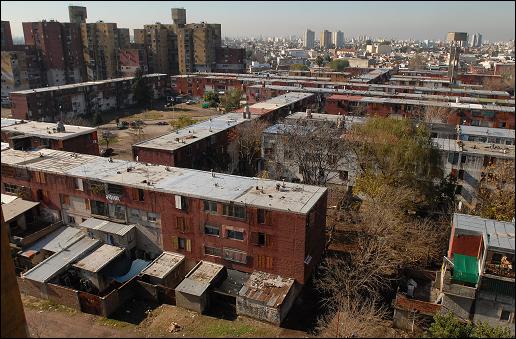
Estoy hace dos semanas releyendo historias de vida, feliz de tener esta grabaciones y leerlas y releerlas. Termine el lunes con la de Lorenzo (seudónimo) persona de mayor edad del barrio y legendario "informante" de generaciones de antropólogo (y me pregunto si tiene sentido usar seudónimo, pero sí). Algo que me sorprendió es que en sus aventuras en el Chaco aparecen en distintos momentos figuras no humanas que remiten a su posterior experiencia en Buenos Aires. Buenos Aires ya y de antemano había determinado su experiencia en el Chaco, incluso antes de haber siquiera imaginado ir para allá.
A los 11 años se le aparece un ser con la capacidad de mutar, que lo sigue y le ronda en distintos momentos de su vida. En este caso toma la forma de tigre. Lo ve primero caminando, cerca de un laguna. Esta vestido de azul y pasa fumando. Deja el cigarrillo se aleja y desaparece entre los pastos para aparecer de nuevo con forma de tigre, rayado. Le pregunto si cuando es humano esta vestido como gaucho y me dice que no que es el trajecito de trabajador como el que usaba después en el puerto, pero bien limpito.
Otra vez es joven de unos 20 años y esta pescando y ve algo raro, como una lancha pero que no es lancha de verda. No le dice a los compañeros pero esa noche vuelve solo y se encuentra con un puente, igual al punte que años después construyen entre La Boca y Dock Sud.
Estaba mas bien concentrada en los otros desplazamientos, del Chaco a Buenos Aires, o los posteriores de Buenos Aires de vuelta a Chaco pero que son en forma de mercancías, mensajes, noticias. No había considerado como llega Buenos Aires al Chaco antes de que ellos lleguen, y menos aun los desplazamientos no-humanos en los que Buenos Aires de extiende al Chaco.
Wednesday, September 21, 2011
Buenos Aires en el Chaco
Posted by
polaroid
at
10:28 AM
0
comments
Labels: buenos_aires, dissertation
Monday, August 29, 2011
Buenos Aires
En esta primer etapa de escritura de un capitulo de la tesis, que es basicamente descripciones y más descripciones algo que me aparece algo que tengo que terminar de desenredar y es que buenos aires más que como lugar me aparece como entidad, buenos aires expulsa y atrae, "se piensa" blanca, da lugar a grupos en momentos pero solo si se presentan como dentro de ciertos modos. Por supuesto aca hay algo de buenos aires y sus grupos dominantes, pero decir grupo dominante es tan inespecifico en la etnografia como decir marginal o subalterno. Bueno no se si estoy hablando de Buenos Aires como ensamblaje en funcionamiento pero mirada desde donde. Me recomendaron leer el Lefebvre de urbanismo. A ver que sale, me parece que contestar esto va a ser una de las claves del trabajo.
Posted by
polaroid
at
6:34 PM
0
comments
Labels: dissertation
Tuesday, October 26, 2010
History of the fort II

In the 1978 that the world soccer championship was played in Argentina during the bloodiest of the military dictatorships. The military government took this chance to initiate a campaign to respond to the international concerns with the human rights violations being commited by the Junta (see Taylor 200..). As part of that campaign there was a new attampt to clean shaty towns from the city, or at least to evacuate the most visible ones and hide others. One villa known as Ciudad Oculta (litaraly "Hidden City") had a wall built around it so that from the "outside" of the vilal one could not see the inside of poor houses and deficient infraestracture (see Scorer 20...), separating people in the inside form people from the outside. The wall was also interrupting movement from different points of the villa connecting it to the rest of the cityand restricted people movements to get in and out through fewer points. Ver algo mas sobre ciudad oculta.
As part of this campaign a new attempt was made to empty the most uncompfortable of all shanty towns, the villa 31, that borderes the train station Retiro at the centre of the city only a few blocks away from aristocratic Recoleta neighbourhood, and the financial district. It was a big group of people form this villa some of the people arriving to the fuerte apache that V remembers as the big arrival of "unknown" people. It was them who also renamed for a short time Fuerte apache as Padre Mugica, a priest from the so called third world movement who worked mostly with the villa 31 people, and who was killed in 1974. for V that was turning point in the Furte, as form then on he was less compfortable in that place. He mentions that the new commers did not practice solidarty, some of them were immigrants from other countries and that some of them robbed as a way of life, what for him was the responsible for the neighbourhood to get stigmatized as a bad place. During that period V continued to be an activist in the first indigenist movements of the country, with the companion of a calchaqui indigenous person from the province of Salta but who had arrived as achild to the city and he had met at the Hotel de los Inmigrantes, they founded the AIRA an attempt to create a unified indigenous association at the national level. He recognizes he was never a front person as he does not like to talk in public, and he was not into establishing realtions with political parties as others in the associations were. At all times his main interest was to define what is an indigenous thinking and look for ways to be able to live according to that. In spite of this side position, he became a well known person in this growing indigenist movemnt and participated in multiple meetings, worked to solve conflicts in different regions and was part of a generation of leaders.
In the 1980s a big group of Toba from the Chaco arrived to the Fuerte and contacted V to ask if he thought they could take some empty shops in el fuerte. V instructed that they had to act wisely, "they had to act all together, otherwise if it was only a single family they would get eveicted, they had to occupy at night and stay in there for many days untill the police would accept their precense." he explained to me. The group of 4 families, among which Z family was did as they were instructed and lived in the shops for several years. V and others living in the shops explained that soon neighbours started to recognized the area as the palce of the "indians" and in spite of their small number they got some fame in and outside the Fuerte.
Z narrates that once he asked for a remise (private car acting as a taxi) and when the men arrived he was asking if it was true that in there where indians living there. Z happy of not being recognized as one replied that, that was true and that he could go to the other side to see them. But then when his daughters arrived, young and well known for being pretty he said "here are the indians, I am an indian too and my daughters are indians. Here you have them. you have met the indians." At this point of his account he would laugh in a loud voice explaining how the remisse driver was shocked to see "he was talking with an indian all the time" adn how the converstaion followed by him asking if they were really indians becasue they did not look like ones. Appart form the way racial steroetypes were playing in the interaction of this group of families and the other neighbours, this narrative shows that in spite of the small number of people the tobas were having a particular visibility in the Fuerte.
[He also clarified how he always surprised people when he said he was an indian because he doesn't look like one, as he is the son of a Toba woman who was fond of gringos and so got pregnant of a man of polish descent she met during cotton harvest in the chaco but then did not see again. Z expalins how he and espacially his daughters whom he describes as being "so blond" even they have brown hair, are most of the times not recognized as indigenous and in turn are "discriminated in the neighbourhood for being white". Note: this does probably not go here]
It was in the 1980 that Jose de Ser is said to have named the neighbourhood the Fort (see clarin, y nota Alarcon en Pagina). It was the turn of Z oldest daughter, a women with a strong personality, recently separated from her partner, and in her forties, with whom we made a very long life history, who illuminated on the story of how the Fort became named in that way. I asked other people about this story and I got not a robust affirmation nor a drastic denial. Even if the story is not "representative" of the dominant narratives about the collective experience in the fort I still find it representative of the experience the Toba families and in particular this intermediate generation was having in the 1980 at the monoblocks. In particular in regards with the way they were engaging with slippery forms of identification as "indigenous" in the city, in a tension in which they self identify in some instances but also prefered not to be identifed in others. Overall these families were making meaning about being tobas distant form the "source" of experience and place of identification, the chaco. At the same time they were confronting the effects of their bodies being a racial index of a generalized poor marginal urban inhabitant while they also recognized the complex set of asociations whenever they were recognized and interpelated as indigenous by other urban dweller.
Sara was then the one who told me how the whole neighbourhood gained it's name of Fuerte Apache after them, a group of 6 toba families. It was during a shooting between the police and a band of Chileneans who have made a major strike. The shooting with the police had started elsewhere (she does not remember) and then the band had run to search for refuge in the neighborhood at home in the nudo 3, the same in which they were living. The band occupied an apartment in a upper floor so once they were there they started shooting the police from the windows. The shooting took several hours and attracted the media, among whom was Jose de Zer, a well known journalist for his sensationalist style. According to police declarations the band of the Chileneans was out of reach once they were in the towers, because it was almost impossible for the police to enter the neighbourhood as other bands would ally with them and shoot the police. In addition Sara explains that Jose de Zer found out from the police that the building were the Chileneans were, was occupied by "indians" living in the ground level and who were evidently protecting the thefts. Then is when according to Sara Jose de Ser said his famous line that ended up giving an infamous name to the neighbourhood for ever. Something in the line of : "This part of the city is like the far West. Thefts get into the towers and become protected as if insede a Fort, this is an Apache Forte were the police nor the law can enter." Sara explains that someone among the toba families still kept the newspaper article in which they name the Toba families as responsible for defending the criminal bands in the Fort. Her explanation was highly spatial too. They, the Tobas were on the ground level and the thefts on the tower. The indians were thus the first protective line, creating a shield to the building, the thefts the shooters form above. Tower thus is literally how they call the building and also a reference to the defensive tower in a fort.
The shooting between a band call Los Chilenos and the fact that it was Jose de Zer the first to name the neighbourhood in that way is confirmed by journalist sources (see Alarcon 2008). While other point to the movie "Fort Apache, The bronx" as the cultural reference to the naming of neighbourhood (see Camps 2000).
This narrative of points to at list two points: the impact of the Tobas living in Buenos Aires was of very important dimensions, not only forthe "average" city dweller and the police, but also for the neighbours of the Fort themselves who pointed to this small group of people as an other within the other; the recognition and affection this interpelation was generating among the Toba families. It is this
As Taussig has signaled the indians are both mysterious and regarded as powerful (also Mary Douglas would say this because of unclasifyable nature). "Indians" are strange, are feared for their power to fight, and interestingly matched with a mediatic indian. The tobas and the Fort become a space of exteriority understood by the reference of to a foundational violence of North American society and transmited by media especially TV: the Far West, as a space, and to the Apache Indians, as its subjects. It is not a surprise then that a popular and sensationalist journalist choses a Tv cultural reference to describe an event taking place in Buenos Aires, a city imagined itself as white, western (in the 1980s and 1990 the US becomes a strong cultural reference when before that France was mostly the references to what Buenos Aires wanted to be) and non-latin american. The Chaco "indian" is not even conflated with a latin american indian, or with the presence of "latin americaness" in the city, but has to be codified as the North American "barbaric" character par excellance: The Apache indian. [parragraph to be polished]
List of references for this chapter
Ratier Cabecita Negra
Ratier Villeros y villas miseria
Verbinsky Villa Miseria tambien es America Latina (fiction)
Alarcon Cuando me muera quiera que me toquen cumbia
Alarcon nota 2008 Barrio Fuerte newspaper article pagina 12
Camps, 2000 Fuerte APache newspaper article Clarin
Svampa Cambio de epoca, Los que ganaron, Entre la ruta
Tamagno Ser Toba en la casa
Buscar Wright 2002 El chaco en Buenos Aires
Scorer, J 2007 Nomadic City
Gorelik, Bs As
Ciudad Oculta
Interviews V, S, J, Z
Posted by
polaroid
at
5:56 PM
0
comments
Labels: city, dissertation
Thursday, October 21, 2010
History of the fort
The history of Fuerte apache is not disengaged with the history of the toba people in Buenos Aires. In the life history of the oldest person living in the neighborhood, also the first person in the neighborhood to come to Buenos Aires he presents his own personal trajectory closely related to the one of the fort.
(Check life history of V)
He first arrived in Buenos Aires to leave in Dock Sud, one infamous port neighborhood, and weeks after he had arrived the neighborhood had a big fire. Many families were relocated to the Hotel de los inmigrantes, and then he went back to Dock Sud. From there he was aided by a group of university students to pose a demand for housing and land along with other neighbors. He recognizes himself as one of the leaders of the demand and as working closely with the students to put the paperwork together and negotiate with the government, at the time a peronist government. They were asking for permanent housing which was going to take some time to be built. It was at that point that V explains that they started a new stage in the building the "fort" in order to relocate a number of people living in shanty towns.
This coincides with media information’s that recognizes the neighborhood as a result of military governments attempts to eradicate or at least to hide the shantytowns. If apparently the first building were end of 1960 during a Ongania dictatorship, it is more certain that it received relocated shanty town dwellers in 1973 (clarin 31.10 2000 http://edant.clarin.com/diario/2000/10/31/s-03101.htm). After that there was an intermediate democratic period in which the neighbors renamed it "barrio Padre Mugica" after a recently killed third world priest. Before the 1978 world cup played in Argentina and in the period of the last and most violent military dictatorship new period of building apartments was undertaken to empty shanty towns that would be visible for tourists and international press and the plan was to relocate families in that area.
This history of being a place built to relocate shanty towns is probably one of the reasons why the Fuerte and the monoblocks themselves are considered "villa" in an ambiguous extension of a place name, that seems to refer more to a population than to an architecture or the availability or not of services. In any case it shows that in spite the supposed intention of the government was to end the existence of such marginal places in fact it was rein scribing and producing more of such places. It also shows that for the people living in the villas the stigma of aileron is not something easy to remove. Having a job, but also moving from a single room house made of cardboard and plastics to an apartment with running water and electricity in a 10 story building would not warranty them to get away from the stigma of being "villeros".
The responsible of the demand were living in precarious houses, a type of house identifies as the defining house of a villa and of rural to urban migrants, made with recycled pieces of wood, cardboards and plastics, and thought as a temporary, and thus part of the negotiation was to be relocated in temporary houses (he describes them as nice houses but small and made of wood) in Espeleta a neighborhood to the south of the conurbano. That temporary emplacement actually became their home for several year, to the point that when the neighborhood in ciudadela was ready to receive them as new inhabitants, many families preferred to stay at that place and not move. He says that even this idea crossed his mind, after having demanded so strongly for the place he could not back up at that point.
It was in the mid 1970s (V does not remember the exact year) that he and other people were taken to inhabit the fort. According to his narrative the distribution of the apartments was not as orderly as they had expected, they just let them go and get inside a house and that would be theirs. He and his family looked for the first they could enter and there they stayed. After they were inside they were given keys and property titles. Some people were luckier to get three bedroom apartments, while they got in a two bedroom.
Posted by
polaroid
at
5:44 PM
0
comments
Labels: city, dissertation
Tuesday, October 12, 2010
El fuerte - The Fort
(Good compilation of videos and basic information of the neighborhood here)
I stopped to watch the soccer court. A group of teenagers was playing a serious match; at least they looked concentrated and organized, with full teams on both sides. The younger kids and some girls watched as they stood beside the court. The sky was of a dark-grey, it announced a storm and made the synthetic green grass of the court glow with increased intensity. I wondered if the match would still go on during the time of the final game of 2010 FIFA Soccer World Cup. "The court was a recent donation of Carlitos Tevez" Z explained to me. "that is where the old dust court where he started playing used to be, he lived over that building just over the court" "That is nice of him, has he ever came back ?" "Yes he does. All the time, we were expecting to get to the final and won the cup. In that case Tevez said he would pay for beer and burgers to everyone in the barrio who went to the burger cart on the corner. That is where he used to go for beers after his games. The owner ended up being a good friend of his. Now people went to see the Argentinean games over there." Tevez is the one celebrity of the Fuerte both a pride for the neighborhood and a figure that has made the neighborhood popular as he frequently talks about his origins in the interviews. From his humble origins playing in the dust court where the pressure of betting was part of the game and where he had to confront players carrying arms in the waist, he then started playing at one of the big clubs and turned into one of the best players in Argentina. He was sold to the Manchester United were he became internationally renounced. The people that have lived in the Fuerte where happy to talk to me about him and would tell me anecdotes with him when we were talking about the life in Fuerte. I also used it as a topic of conversation to decenter the negative connotations of the Fuerte and explore if they had positive aspects and experiences about it too. Unfortunately for the burger eaters, the Argentinean team under the command of Diego Maradona did not make it further than to the "octavos" and that day the final was between the Netherlands and Spain.
"That building over there the number four is where we used to live. We could watch the games from the balcony. That balcony is where my deceased wife spent most of the day, washing clothes and hanging them, and then sitting to take a few mates and keep an eye over our kids playing bellow. It was the part of our house where she felt most comfortable, as in the Chaco we spend most of our day outside and it was really hard for her to live in such a small and enclosed place." "Can I take a picture of you Z and the court and the building where you used to live behind?" "Sure" he said taking a step behind and posing for two seconds. But as I took my old automatic film camera, (a camera I had especially taken that camera thinking an old camera would not draw the attention over me as a journalist), he changed his mind. "Ok wait, better not, someone might get upset, put it away" he said suddenly being protective and assuming his role of warranting a calm visit to the neighborhood.
We walked pass the court in the direction of the buildings he had just pointed. We got to the corridors of the "nudo" (buildings complex) where his daughter lives. Orientation was complicated for me as buildings are all of a similar style and with multiple accesses just as any complex of buildings of the same style and with not a traditional distribution around roads but organized in blocks. Apart from the presence of the gendarmeria, so far el Fuerte was a place where I was not feeling much different than in any other working class neighborhood I had visited. We walked up a staircase to the second floor, the concrete walls and floor quickly connected me with that architecture I knew pretty well as a 1970 style and which the connect with the dictatorship. As we went up I could see other common element in the suburbs: metal screens protecting the doors and windows. For me it was a paradox that the middle class uses those screens to protect from the "poor", and when one is in a working class or marginal neighborhood you see that same element that distances families form the "threats" now displaced to the street.
A smiling late twenties woman opened the door; with her free hand she holed a 6 month old baby. Her hair was wet and smelled as conditioner. I did not take out my coat as I insisted in returning to the market to buy empanadas for all of us so that we did not generate work to our host, but she insisted she wanted to cook for us and show us what a great cook she is. She added that her father loves her food so she wanted to treat him in his visits to her. She made us sit down and I regretted I had not taken more food with me and handed in a big chocolate and a pudding for desert I had taken. Her two kids came out of the room where they both sleep and where they were playing, the older girl is in fourth grade and is the best of her class her mother explained, the boy is still in kindergarten. Her husband came out of the other room, the second one of the rooms; he also greeted us with very warm smile. He was instructed by his wife over what drinks to buy and where to get the bread: the second nudo for bread as is cheaper and better there and just the downstairs locales for coke. He left with an umbrella as it had started to rain.
The house was warm in spite of the chilly and wet weather. A small dining table and several chairs around took half of the living area where there was also a dish cabinet, a regular cabinet and a computer table with a computer. As the husband was leaving he told his daughter to put down the volume of the TV and to play some music. The girl turned the computer on and selected a playlist; the sound came out from the music centre speakers.
She started preparing coffee, a drink that I have learned to associate with more "urban" toba families, as what is most common is that any toba family will offer you mate as soon as you sit down to chat. Mate is also the wide spread drink of all Argentinean rural areas, being part of the basic courtesy gesture to offer you a well prepared and warm mate whenever you visit someone. She also asked if we wanted something else for a late breakfast. Meanwhile she started cooking; she was finishing a Bolognese sauce for pasta she would prepare. Her husband returned a couple of minutes later with fresh bread and coke.
We chatted about the soccer game and about her wedding two years ago as the daughter showed me some pictures in the computer. Her husband came back with the groceries, he changed the TV channel form a children's movie into the transmission of the game. He commented in being happy for getting cable TV a few months ago, they had more than 100 channels now, it was not so expensive as it was a special deal for the whole of the apartments of the block, but you still need to pay to watch TV he commented as he started laying the table. We talked about what each of them were doing these days, she is taking care of the children but she does other stuff in the side, she sells clothes, and cooks. Her husband, after doing several jobs, started working on a maintenance company. He was happy to have a job where they got to do a number of varied tasks; he had a very good relation with his boss who many times gave him the left over materials to take to improve his house. In fact beside the kitchen he had pilled a full floating wooden floor he was hoping to install in his next house, or sell it. L enquired about what job her younger siblings were having and how they were doing in them, they discussed how much money each of them was making, if there was any chance of getting better and how they were thinking of investing their salary. Z explained the younger was saving for Nike sneakers and the older wanted to get a TV.
At one point L's husband asked about my relation with Z, L explained that I was one of the language students of his father. "Are you a journalist?" "Kind of that. I am an anthropologist." was my reply. I immediately realized that as much as the barrio Toba is harassed by anthropologists along with other people interested in the "indigenous", the fort was continually being approached by journalists that want to portrait "true life" in the supposedly most dangerous place in the country. It was no surprising that L's husband was equating mi visit and interest in the fort to the voyeuristic interest of the media. Apart of the wonderful hosts they were being I was even more grateful that they were receiving me at their place so openly. I explained about an interest on Toba's migration to the city and to get to know all the places where they have lived, but that rose no particular interest.
I went to the kitchen as L finished preparing the meal. AS she chopped the meat and stir- fried it for a few seconds she told me how when Z moved to the "toba barrio" she never really moved with them, she was only there for two months in which she went back and forth to the Fuerte. By then she was too used to living there and that is the place where she feels at home. She understood her family wanted to move as they had more space over there but could not join them even when she tried. Her older sister C (now also living in the toba barrio) stayed in an apartment with her boyfriend's family, as well as the eldest of the brothers who was living in the "villa" of the fort (a group of precarious houses built in empty lots in between the monoblocks mostly to host either relatives of the people in the apartments or younger couples starting their own) who lived there with a girlfriend and their baby.
She explained that the toba neighborhood was too far away from the city and to sources of work, it was too isolated. In addition she did not agree the barrio was a safer place, as the only time she got robbed it was in the toba barrio and not in there. That is why she gets very angry when people portrait it as a dangerous place and a place of criminals and criminal activity. I agreed about how the press presents marginal neighborhoods when most of the people there go to work every day. She nodded and said that of course there are some bands of young men and criminal activity in the fort but the worse time was when different security forces literally took over the barrio. "For some time you could see all the existing military uniforms in here, there were green and blue and some of those you see only in the movies. They were carrying all types of weapons, always showing they were taking these big guns. I got very scared as I took the kids to school and had to pass through several controls. But still I have to recognize that night shootings were less frequent after that, the fort became a calmer place."
A few minutes later the sauce and the pasta was ready, we sat down and eat as we watched the game preview. They want back to tell me about their wedding only two years ago. How she had bought a beautiful dress for very cheap from the bagageras, women who take clothes from the shops and sell them. She told me how she had to go through a very quick conversion into Catholic Church because they could not find her baptism act, and how the priest had helped them expedite the marriage. The husband explained how this is a priest he respects unlike the priests and nuns of the school where he used to go as a boy, who would mistreat him and who do not really care about the people as they claim. There was one time in which he had answered in a bad mode to a priest and he just sent him home alone. He was only seven years old and was glad the way to his place was a straight line, but he had to do the whole walking off over a kilometer on his own. His sister, who generally took him and picked him up, was really worried when she saw him returning by himself at an earlier time.
The pasta was really good, there was still some after we have taken more than one serving each of us. We watched the first part of the game and L heated a bit more of coffee. In the intermediate time she told me she would take me for a short walk to where they lived as children with Z. We took two umbrellas and went out. We walked across a corridor and up a stairs and then we crossed two of the bridges connecting different buildings and we got to the apartment where they lived. 'That was S, my older sister's window", she told me as I recalled some of the things S herself had told me about her experiences in the fort and how some friend once shoot to her window to make her come down to hang out with them. She pointed to the living area window and then she took me across other passage. Up there in the eighth floor was were Tevez used to live, there is still his uncle there". From one of the corridors I could see that the soccer court was emptier now, just a few of the younger kids were playing there, probably taking advantage of the fact that the older ones had left.
We went back to the apartment and we had a second coffee. It was past 4 pm and Z suggested it was a good time to start heading back, or that otherwise we would catch by the night. We decided to take another train back as it was more convenient to get home for both of us. We walked into the opposite direction to where we had came in, crossed underneath some of the other buildings, passed through a small park and then we took a side street. Over that side there was no police, showing that that was somehow perceived more as a back entrance. Z explained that he used to take that way too as he worked as a construction worker when he lived there. He did not have a same work place but changes locations almost every week, his boss would wait with his van in some of the train stations. We walked two block and we were on the bus stop leading as to Caseros train station. As we waited Z said "did you see how small the apartment is over there? There is really no place". I was surprised of his perception, after all the apartment was no different from many small urban apartments and the inside was very well kept and equipped, my overall impression was that I had just visited a cozy apartment.
Posted by
polaroid
at
10:13 AM
0
comments
Labels: city, dissertation
Thursday, September 30, 2010
escapando de la villa y visita
bue primeras dos semanas y no llegue con mi objetivo, quizas deba cambiarlo para no fracasar tan rapido. quizas deba dejar de tener insomnio por preocupaciones economicas respecto al a;o que viene, quizas deba dejar de enfurecerme con la institucion q me deja sin alternativas en un momento de particular vulnerabilidad. aca va lo que si escribi y que son mas unas 500 palabras por dia de trabajo. aun desordenadas, descriptivas, sin clara linea argumental aun. pero bue ahi va. escapando de la villa al barrio
1. Discourse
One of the first things that I heard about the Toba neighborhood from the older people living in it was how important was its constitution as a way to “get out” of the different villas (shanty towns) they were living in. This view was also shared by the people working in two NGO's who have helped them put together the project to receive the land donations and to generate a housing project, and different anthropologists who have been in touch with them during that period. Regardless the different moments of arrival to the city from the Chaco, the people that now constitute the barrio have lived and moved around several of the biggest shanty towns in Buenos Aires. Some of those shanty towns are very well-known through the press as being “holes of criminality”. Describe them as centres of illegal drug distribution, the residence of robbers and kidnapers that have generated a supposedly wave of insecurity, thus regarded as the responsible for one of the most compelling issues of concern of Buenos Aires Citizens (Quote TN, Macri’s campaign). Echoing the media discourses the common narrative among the “heads” of the families of the barrio is that life in the villas was getting unbearable: violence was escalating as a result of confrontation between gangs and with them and the police, drug dealing started to be a more common activity, and in the last years a lot of new people had arrived turning relations between neighbors into relations of strangers. Some people explained they had gotten robbed “even inside the villa” as a reference of the transgression of the basic respect of not stealing to fellow poor neighbors (a shift that Alarcon refers to in his journalistic research, 20xx).
Villas In all these descriptions a sharp contrast between the life in the villas and in the Chaco was stressed. The Chaco is presented as a place with no violence, where drug dealing and consumption is unknown, neighbors share food and tools and cooperate with each other. The adults in the neighbourhood (people in between 45 and 65) explain that they felt a total estrangement in the villas when they arrived to the city they and had no other place to go but to where most working class rural migrants settle.
Quote interview CL
The villas or barrio de emergencia, are scattered around different vacant areas near the city centre (such as railway lots) but mostly around the different concentric “rings” that surround Buenos Aires city constituting the conurbano or metropolitan Buenos Aires, a jurisdiction different from the city of Buenos Aires. People explain that they had no other networks in the city than with people living in villas, or when they did, it was in the villas where they were able to get a place to be. Coming from rural villages, marginal neighbourhoods in Chaco towns and cities, most people explain that they were unfamiliar with the dynamics of the villa, they felt observed, did not want to join collective events, were afraid of being caught in the middle of a dispute between youth banditas (gangs). Their estrangement got to the point that they were staying inside their homes most of the time in fear to being outside, they did not allow their children to play in public space, they run their way in and out of the neighbourhood to work, and could not receive visits because they were afraid of going there.
Quote Interview AM
Context of migration and arrival to villas. This, they explained, was in total opposition to how they use space in the Chaco, where most of the day is spent outside, meals take place around the outside kitchen, children come and go with ease being taken care by multiple women at the same time, and where visits are received in the galleries outside of the houses. Synthesizing this one man in his forties explained after a visit to the Chaco that he missed “the liberty to be outside, walk wherever you want, go hunting to any field”. The contrast was established in particular among the people who had arrived in the late 1980s and the 1990s to the city, a moment of deep economical crisis followed by the instauration of strict neoliberal reform. This reform that generated unemployment in the rural areas and in a broad sense can be identified as a cause for migration, also implied a drastic turn in the life in the city. State welfare programs and services were drastically reduced, the markets opened to foreign commodities and investment that generated national industry’s collapse and massive layovers of workers, state indebt and dependence from foreign loans that established the terms of those loans. The Tobas had experienced some of this process in the Chaco with the reduction of employment resulting from the crisis in the agro-industries and the mechanization of some of the processes they have been hired to cover decades before.
The first men coming for periods to Buenos Aires between the 50 and 70 had experienced the city in a different way. For them the city was a site of enhanced possibilities of accessing to a paid work, and to obtain better salaries than what they get in the Chaco. For these men, as for most migrant men the shanty towns were still potentially transitory places, however the context of the late 1980ies and the 1990ies the villas were places where people barely subsisted under the level of poverty and in some cases in state of indigence. For people arriving in the 1980 it was clear that people there no longer had the expectation of being able to get out of the villas.
The combination of successive crisis and unemployment, the retraction of state services, the exaltation of consumerism embraced by the middle classes, the arrival of illegal drug dealers are marked as elements introducing major shifts in the villas’ life. Unlike what their parents had experienced, for young men living in the villas in the 1990s the option of finishing secondary in a public school, finding a job in a factory or construction industry, saving money to have an independent home, stopped being a clear possibility. They did however share the desire for commodities, and the exposure to the search for immediate and intense forms of pleasure. This desires motorized by by the so called “the big 1990 party”, referring to the excess of commodity consumption, of political corruption, of easy money making to some groups, paired up with the experience of the impossibility to access education, health, the deferral of a accessing a salary, appear as the main reasons to explain why young men belonging to the former working classes got into robbery and into drug trafficking ( alarcon, “pibes chorros” svampa?) The involvement of young men in these activities conversely is what is presented as responsible for the start of a new era in the villas. An era in which the former widely accepted solidarity among the workers and poor was no longer sustained.
The Tobas however claim they have always kept themselves distant from those dynamics. They have been equally affected by economic crisis and social exclusion but in the narratives they present those changes as something exterior to them. In the narratives of people living for a longer time in the city they explained how the villas were very rapidly filled with people from other countries that were robbers, gangs known to have deals with the police, that generated situation in which they were caught in the middle with a reduced agency. All these events were presented as clear demonstrations for the need to leave the shanty town. Unlike other groups identifying with the shanty town in different moments of their history and all the social movements that have tried to transform the conditions of the villas and the life of the people in them, the Tobas now living in the neighborhood planned their way out.
Even when in longer accounts these experiences of feeling aliens to the villas were made relative, that the people they present as aliens and threats were in some cases good friends too, and when I found that not all the generations of each family had the same relation to the villas, the estrangement was a structuring narrative about the villas. In addition this estrangement is what explained the very existence of the barrio: as indigenous people they were not meant to be there, they had a different culture, they needed to be on their own in a calmer place. The NGO’s, schools, and anthropologists claimed the same, a suburban shanty town becoming violent could be a place for other people but was not a place for them one of the indigenous groups that have kept their authonomy form the Argentinean state for a longer time, who speak their language and thus are regarded as some of the most authentic unpolluted groups in the country. The indigenous are different: they had to be aided in finding a way out of the shanty town.
The barrio is therefore presented as a place of a necessary restoration of an order, in which in the Tobas distance themselves from other urban marginal groups, and in which the place they occupy is to be defined as a distinct place of aboriginality. In the words of one of the residents of the neighbourhood, a man in his forties, during a talk at a school, getting the lands of the neighbourhood was somehow like "going back to the chaco”, they now had big lots of lands with a garden and green fields around, they could see the sky and let the kids play outside. To this I would add that they also went back to living in delimited "Toba" locations and with a strong presence of the church, as the land donors and their immediate neighbours is a religious school (this is not to say that there is a relation of dependency, but that for many decades aboriginality in the Chaco is strongly intertwined with catholic and evangelic churches).
Barrio vs shantytown When I went to the neighbourhood the difference between villa and barrio were not absolutely evident in a first glance. I appreciated the main differences, in the barrio they have much bigger lots with space for a garden, they had brick houses, there was a smaller population density and the area was not as highly associated with criminality. However the young couples still had to take build themselves houses in plots they take, and they build these houses in a precarious way in the same way as shanty town houses are built. In addition in the dominant images the whole conurbano is a space of a general insecurity, housing of pauperized working class, (except of course for the north zone by the river and the spots of privilege represented by the gated neighbourhoods).
The first day I went to the neighbourhood the difference between barrio and villa was not so clear to me. I had received detailed instructions on how to avoid some dangers, go in the early morning, take the train in Retiro, do not walk from the train station but rather take a bus that would leave me in the barrio. I was in the middle of taking mates with the family that was my first contact that a kid clapped its hands outside, the younger of the men I was talking to went outside and asked the kid what was the matter, the kid replied they were collecting money to pay for the coffin of a neighbor that had killedhimself in the middle of an drug overdose. They explained everyone knew the man was very into drugs, he was unemployed and had a big family and robbed every now and then to get money just for the drugs. The barrio then was not an absolutely different space from the shanty towns. It was not exempted from the characteristics alluded as the reasons for moving away from the villas. Especially among Toba youth it could not be said that women and men were having better opportunities to find a job accessing education and saving for an independent house. If the improvement could be mostly measured in regards to owning plots and brick houses, why was such a huge distinction being made between one space and the other? In the initial months of my work and as I collected histories about the constitution of the barrio it was not clear for me how such a big qualitative difference could be established, except for the fact that the neighbourhood became a distinctively an indigenous place.
It is exactly because the neighbourhood is not only a "place" but mostly the result of successive flights form other places and situations that it is not enough to analyze of the narratives of how the neighbourhood contrasts with the shanty towns, how shanty towns contrast with the Chaco, how the neighbourhood is somehow like the Chaco. In this sense place making can be analyzed through semantic analysis to reach how places are experienced by people. However I find this is not enough. If place is a result of bodies moving in space and establishing new connections, of embodied rejection to become a villero (Agamben's muslim?), of the desire of being close to the big city of Buenos Aires, I found it was relevant to focus on the moving trajectories of those bodies. I did this by , tracing these movements in the narratives of people of the barrio and by joining some of their movements opening up space (Massey 2005). When people I talked to mentioned that coming to the neighbourhood was a relive as it implied moving out of the villas they were not just contrasting two places. They were also talking about the efforts they had to do to find a new place, the resources and relations mobilized and the fact they have succeeded to get away from a place that motorized relations they were not interested in pursuing but mostly to be placed in that location generated a series of stigmatizations they were not willing to carry. One question to pose is why they were not willing to renounce to be identified as indigenous while they did not accept to be regarded as villeros, ie pauperized working class, marginal, lacking of education and refined manners, even criminals. Unlike other ethnically marked urban enclaves, the creation of the neighbourhood then is not only the recreation of communal ties existing in place they migrated from, nor is it only the unplanned grouping resulting of chain migration, but rather is the result of a collective plan of escape, in which indigenous identity joins a groups of people from different Cahco areas, and is used to distance from the villas and the villeros. Thus to understand history of the neighbourhood it was not enough to compare country and city, Chaco and Buenos Aires, but to learn some more about the villas they were coming form and where many families have lived for more than ten years.
2. Visit
I worked with Z since the beging of my fieldwork. Being over seventy he is one of the older people, one of the first to come to Buenos Aires during the military service. Z is father of eleven sons and daughters, most of them adults with their own children living now in independent houses in the neighborhood. Because of his own children and as he helped other relatives to come he has generated one the biggest of the extended families networks in the barrio. In addition Z is experienced in working with anthropologists and linguists, and quite critical of them too. Z is sociable and fun, his daughters and adult granddaughters are particularly sociable and active. As Z got easily upset if i did not visited him when i was in the barrio, stopping at his place was thus always the first or last stop on my visit to the barrio.
After some of these visits I asked Z to make his life history. In it he told me about his childhood in the Chaco, his coming of age hunting with a distant uncle and cousins. He marked his pass through military service as a turning point that brought him to Buenos Aires, where he learnt and was able to do construction work on the weekends. He later went back to Chaco but returned several times to work for periods and svae some money and then come back to the Chaco, and finally his decision to move with his whole family to the city and the movements until they settled in one of the major villas in Ciudadela where they lived for fifteen years (check) and finally their moving to the barrio. It was at this point and after we have met for several times that we started talking about how the life of one of his daughters was as she, along with other of the older children, had stayed in Ciudadela when the rest of the family moved to the barrio. As we talked about this the idea of visiting her came about.
We met a Sunday morning at the train station, the station is one that sits on the limit between the city of Buenos Aires city and the suburbs named as conurbano. It is the line that runs from the capital city over the river at the east to the “big” Buenos Aires to the west. This is an area known for being inhabited by a lower middle class and a lower class this train carries the stigma of taking you to dangerous areas even when it is a succession of residential areas. Z was wearing a red beret, that was a personal item identifying him and that he wore for special events and visits, a black leather jacket and jeans and sneakers, all in perfect conditions, of a drastic cleanness and ironing. He conducted me to a bus stop under the highways that marks the limit of capital and the suburbs. We took a regular bus that zig zaged through the streets of the first suburb for less than half an hour until we got off in a corner of another street of a neighbourhood with flat and small houses. We walked east from where the bus have left us and as we did so he explained that that bus used to cross through the middle of the monoblocks the buildings that constitute the centre of the so called Fuerte. We arrived at a street that had a coffeshop at one corner and a closed grocery in the other, on the other side of the street there was an open space and a street getting pass through it. In the open space I could see the multiple carts of a Sunday fair Z has talked to me about. After the and contrasting the grey sky I could see the monoblocks, the multiple unit buildings of the housing project built during the third presidency of Peron (check). There was a typical Sunday morning movement in the area.
On one corner and under a tree there was a group of men in suits and women in long skirts, I identified as a group of the church ready to a Sunday service or to visit neighbors for bible readings. On the other corner there was a pretty different group that disrupted with the relaxed pase of a Sunday but reminded me that I was entering the supposedly most dangerous location in the country. A four wheel truck of gendarmeria nacional was parked in the entrance to the Fuerte. Beside the truck four men dressed in green battle uniforms, all of them taking long caliber guns and watching over the movements of the people passing by. We passed by them and made our way into the fair, we passed through it and arrived to a very well built soccer court, with synthetic grass, a tidy fence and professional looking goal fences.
Posted by
polaroid
at
12:44 PM
0
comments
Labels: city, dissertation, indigeneity, mobility